
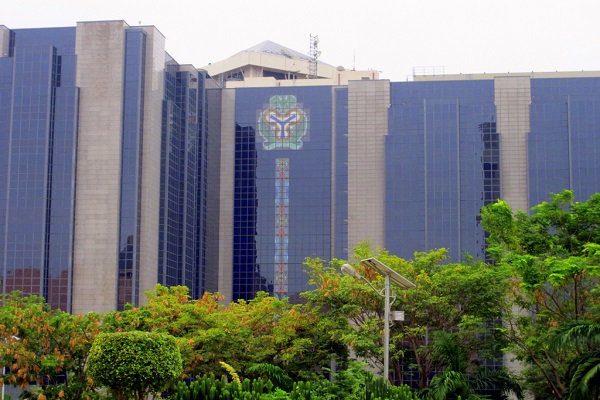
After two years of coordinated reforms, Nigeria has cleared one of the biggest reputational hurdles in its financial history. The CBN’s new fintech report signals what comes next: not just cleaning up, but leading the line.
For years, the most expensive cost for many Nigerian fintechs was not a licensing fee or a compliance audit. It was the reputational tax: the investor who went cold after seeing a Nigerian address, the international banking partner who demanded extra documentation, the gap in global payment platforms that became shorthand for how much a country’s name could cost its operators.
The Central Bank of Nigeria’s Fintech Policy Insight Report, released in February 2026, directly addresses this. It notes that a significant share of digital financial crimes attributed to Nigeria are orchestrated by foreign or cross-border actors using the country as a base or proxy, rather than as the true origin of the fraud. The argument, while not a denial of the problem, distinguishes between what is real and what has hardened into an assumption: a necessary action for rebuilding credibility on verifiable action rather than narrative alone.
How Nigeria got off the list
At the Financial Action Task Force (FATF) plenary in Paris on October 24, 2025, Nigeria was officially removed from the grey list after completing a 19-point action plan to strengthen its anti-money laundering and counter-terrorism financing framework. The exit followed a two-year reform programme coordinated across multiple agencies, with the Nigerian Financial Intelligence Unit (NFIU) playing a central role.
The NFIU, which operates as an autonomous unit within the CBN, upgraded its goAML intelligence platform, improved inter-agency data sharing, and coordinated Nigeria’s engagement with the Inter-Governmental Action Group against Money Laundering in West Africa (GIABA), FATF’s West African regional body. By the time of the October plenary, Nigeria had achieved Compliant or Largely Compliant status on 37 of the 40 FATF recommendations.
An International Monetary Fund (IMF) working paper finds that grey-listing reduces capital inflows by an average of 7.6% of GDP, largely through higher compliance costs and de-risking by global banks. Exiting the list removes the automatic enhanced due diligence that international banks were required to apply to Nigerian counterparties, directly lowering the cost of cross-border business.
The European Commission has separately confirmed that Nigeria will also be removed from its list of high-risk third countries, meaning that heightened AML scrutiny under EU directives no longer applies to Nigerian counterparties.
The integrity infrastructure underpinning it all
The grey list exit is a milestone, but the CBN’s report is more interested in what sits beneath it. Nigeria processed close to 11 billion transactions through the NIBSS Instant Payment platform in 2024, up from 5 billion in 2022, placing the country among the top real-time payment adopters globally.
More than a quarter of all electronic transactions in Nigeria now move through real-time channels, on infrastructure the country built in 2011, years before the United States or India reached a comparable scale.
The CBN Fintech report details a layered fraud defence architecture already in operation. The Central Industry Fraud Desk (HAWK), hosted at NIBSS, provides early warning and rapid multi-institutional response to identified threats. The BVN Watchlisting system and the Persons of Interest Portal allow financial institutions to apply enhanced monitoring to flagged accounts. Project Stallion, the CBN’s Cyber Security Operations Centre initiative, is nearing completion.
The report proposes formalising these into a Shared Fraud Defence Framework, with mandatory near-real-time intelligence sharing across all licensed institutions and a single live repository for fraudulent accounts. A proposed Fintech Trust and Safety Charter would set minimum standards for data protection, responsible AI use, and consumer grievance redress, with adherent firms eligible for fast-track access to regulatory pilots.
The design logic is the same one that made the Bank Verification Number work: build the infrastructure once, share it across the industry, and raise the floor for everyone.
This article was written by the TechCabal Insights team.