

In April 2007, the Independent National Electoral Commission (INEC) declared Umaru Musa Yar’Adua the winner of a presidential election that international observers described as deeply flawed.
Ballot boxes arrived at the collation centres already stuffed. Result sheets were altered. In some states, figures were simply announced with no connection to what happened at the polling unit. The manipulation was largely physical – boxes, papers, pens.
16 years later, in 2023, the ballot devices had evolved. Allegations shifted from stuffed boxes to compromised ballot devices, manipulated card readers, and results that did not match what the BVAS was supposed to have transmitted.
The evidence was disputed. The accusations were not.
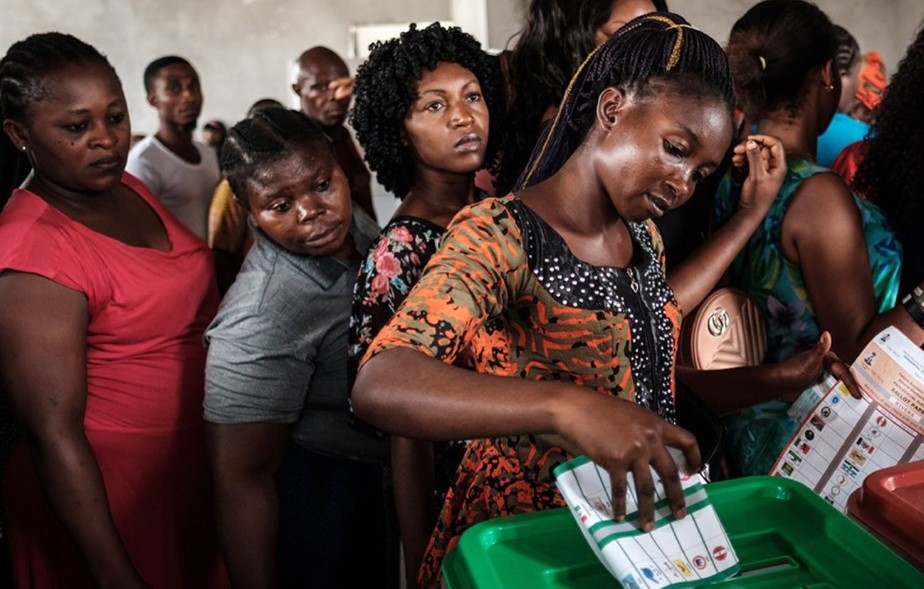
Nigeria’s lawmakers appear to have been paying attention. Buried in the Electoral Act 2026 is a provision that marks a sharp departure from everything that came before it, and it targets technology directly.
Read also: “If BVAS fails, election must be cancelled and redone in 24 hours”- 2026 Electoral Act says
What the Electoral Act 2026 says about ballot devices
Section 119(2)(d) of the Electoral Act 2026 criminalises the manufacture, construction, importation, possession, supply, or use of any ballot box, compartment, appliance, voting device, or mechanism "by which a ballot paper may be secretly placed or stored in, or having been deposited during polling may be secretly diverted, misplaced or manipulated."
The penalty is a fine of up to ₦75 million, imprisonment for a term of not less than 10 years, or both.
To understand why this matters, consider the sentence directly above it in the same section. Forging a ballot paper, one of the oldest and most documented forms of election fraud in Nigeria, carries a maximum of two years.
Forging a result takes two years. Destroying a ballot box is also two years.

Manufacturing or possessing a device designed to secretly manipulate ballots: ten years, no ceiling on the fine.
The legislature has decided that technological manipulation is categorically more serious than its analogue equivalent. That is a significant policy statement, and it has received almost no coverage.
Why does this provision exist?
The inclusion of ballot devices and mechanisms, not just physical ballot boxes, is deliberate and new.
Previous electoral legislation focused on the paper infrastructure of elections: ballot papers, nomination forms, and result sheets. The 2022 Electoral Act, which the 2026 law repeals, did not contain language specifically targeting ballot devices capable of electronic manipulation.
The 2023 election changed the conversation. Civil society groups, including the Transition Monitoring Group and YIAGA Africa, documented widespread allegations of BVAS manipulation in their post-election reports.
Some allegations centred on whether the result figures uploaded to the IREV portal matched what presiding officers had physically signed. Others questioned whether accreditation data had been altered before transmission.
No prosecutions followed. In part, because the legal framework for prosecuting technology-specific election offences was thin. Section 119(2)(d) is an attempt to close that gap.
The enforcement problem
The provision is significant. Its enforceability is a separate question entirely.
Prosecuting ballot device manipulation requires forensic capability that Nigeria’s security and prosecutorial agencies have not publicly demonstrated in an electoral context.
The Police, the DSS, and the EFCC, the bodies most likely to be involved, would need to establish a chain of custody for ballot devices, extract and analyse firmware or software data, and present technical evidence before a court.
Nigeria has no dedicated election cybercrime unit. INEC has no published forensic investigation protocol. The Attorney-General’s office, which would handle prosecution under Section 148, has never brought a technology-specific election case.
The law creates a 10-year offence. It does not create an institution capable of proving it.

On a positive note, Section 119(2)(d) is the most forward-looking provision in the Electoral Act 2026. It acknowledges, in statutory language, that Nigerian elections now have a technology attack surface that did not exist a generation ago.
But legislation without an enforcement architecture is a deterrent on paper only.
For the provision to mean anything, Nigeria needs a clear answer to three questions: which agency investigates device manipulation allegations, what forensic standards apply, and has any budget been allocated to build that capacity before the next election cycle begins?